

It's easy to notarize online. Upload your document at a time convenient for you and click a web browser link to join your notary over online video.
Choose a time for your session and upload your documents to be notarized.
Click a web link with your computer or mobile device web browser to join your notary session.
Scan your ID card and connect with your notary on video.
Electronically sign your document, which the notary will digitally seal.
Your computer, phone, or tablet must have a working webcam. You can access the session by clicking a web browser link. No application download is needed!
You can use a Wi-Fi or cellular data connection. Your network connection should be strong and not have security or firewall blocking features.
US signers can use their state, drivers license, state ID, or US passport. Non-US signers can use their international passport.

Remote Online Notarization (RON) is a convenient digital alternative to traditional notarization. Unlike the traditional method where you need to be physically present with the notary, RON lets you get your documents notarized online through a secure online video session. This means you can complete the notarization from anywhere, as long as you have an internet connection. The process uses advanced technology like digital signatures and identity verification (like answering personal questions or using biometric checks) for enhanced security. RON is a simple, fast, and secure way to handle notarizations in today’s digital world.
For a successful online notary session, there are a few important things you need to have ready. Firstly, make sure you have a computer or smartphone equipped with a web browser and a video camera. This is vital for the notary to see and communicate with you in real-time. Secondly, a stable and strong internet connection is crucial. Make sure your connection doesn’t have security features or firewalls that could block audio and video communication with the notary. Interruptions or disruptions in the connection could affect the online notarization process. Finally, have a valid government-issued photo ID at hand. US citizens can use their state driver’s license or US passport, while non-US citizens or residents will need to present their international passport. This ID is necessary for the notary to verify your identity during the session.
Almost all U.S. states now permit their notaries to perform Remote Online Notarization (RON), providing broad access to notarial services. If a local notary isn’t available, you can use a notary from another state where RON is authorized, thanks to the interstate recognition of notarial acts. While this opens up convenient options for individuals and businesses, it’s important to confirm with the intended document recipient or consult legal experts to ensure RON is appropriate for your specific needs. This step ensures your notarized documents will be valid and accepted for their intended purpose.
At OnlineNotary, we are equally committed to ensuring data and document security as we are to providing a user-friendly experience. Our remote online notary platform offers smooth and accessible service, while designed around the rigorous standards of enterprise data protection. State-of-the-art encryption methods, such as AES-256, target the safekeeping and confidentiality of sensitive information at every step of the notarization process. OnlineNotary’s platform is subject to regular security evaluations and penetration testing. For more details on how we prioritize the security of your data, please view our Privacy Policy

Remote Online Notarization (RON) is a secure and convenient way to notarize documents digitally, anywhere, anytime. Using live video technology, RON connects signers with notaries for identity verification, digital signing, and electronic sealing. Remote online notary provides a fast and reliable solution for notarizing documents without you having to be in the physical presence of a notary public.

An online notary is a traditional notary who has applied for and received an online notary commission issued by the secretary of state authorizing the performance of an online notarization. An online notary may perform all the notarial acts of a traditional notary. At the time of the online notarization, the online notary must be physically in their commissioning state.

Unlike in a traditional in-person notarization, the signer (“principal”) in an online notarization does not need to physically appear before the notary. Instead, the principal in an online notarization is deemed to appear by means of a two-way audio-video conference. And the principal can be located anywhere in the world while on video with the notary during the live notary session.
The notary must verify the identity of the principal using the identity proofing and credential analysis standards set forth under governing notary law. Identity proofing is performed through biometrics or dynamic knowledge-based authentication questions. Credential analysis is performed on the signer’s remotely presented picture ID using automated third party software processes that confirm the credential’s integrity and personal details.
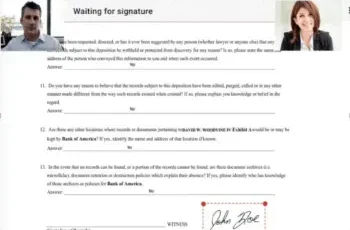
The principal and online notary engage via a two-way video conference session with an interactive electronic version of the document that is digitally signed by the parties. The online notary system is designed to confirm that the document that is presented for online notarization is the same document that is electronically signed by the principal. The session is digitally recorded and secured so that only the authorized participants can obtain access.
The certificate used in an online notarization must state that the notarial act was an online notarization. The online notary public signs the certificate by affixing a personal digital certificate and its electronic seal. This process must be completed in a manner that is capable of independent verification and renders any subsequent change or modification to the electronic document evident. The digital certificate uses public key infrastructure technology and is X.509 compliant.

In an online notary transaction, the notary and principal sign an electronic document. Accordingly, it is advisable that a signer contact the applicable county clerk’s office to confirm that the electronic document can be eRecorded.
You can access an online notary public from any US state — and from anywhere in the world.
1. Nearly all US states have embraced Remote Online Notarization (RON), allowing their own notaries to perform online notarizations. OnlineNotary.us has notaries in most states that legally authorize RON.
2. Even if we don’t have a notary specifically in your state, you can still access an online notary who is commissioned another state. The “comity” principle ensures all US states recognize official acts like notarizations from other states. So, if needed, we can connect you with a qualified online notary from another state who complies with their regulations.
If you have a specific legal requirement that mandates a notary from your state from which we do not have an available notary, using our service might not be possible. In such cases, we recommend seeking a local notary to ensure compliance with specific requirements.